
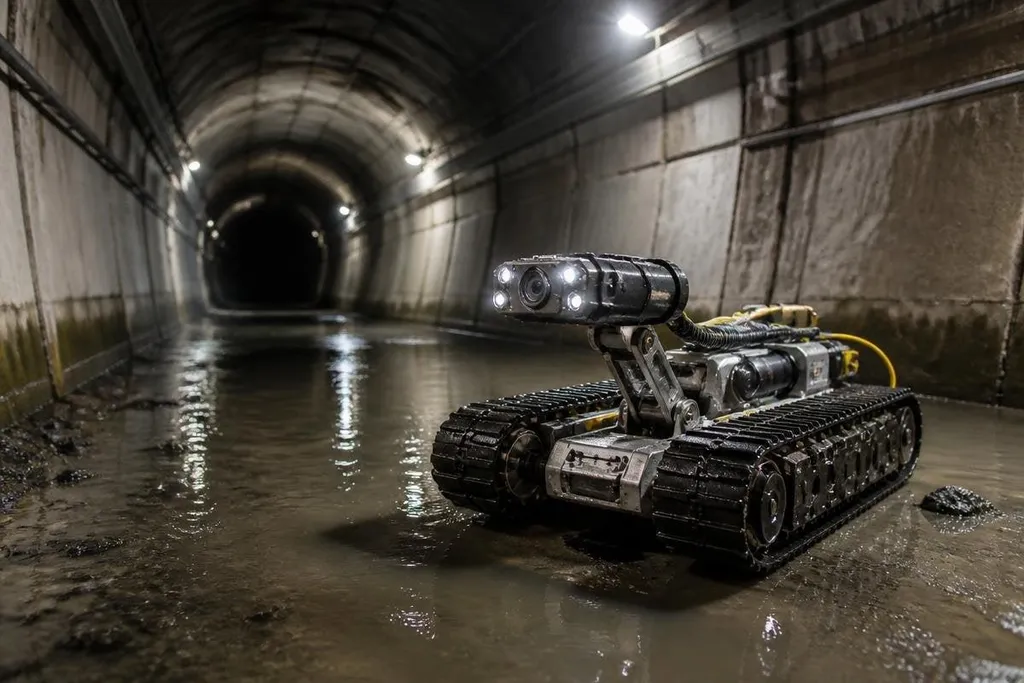
Machines can work where a person would face crushing pressure, poisonous air, intense heat, or radiation. The hard part is keeping the robot moving, powered, and connected when its sensors and materials face those same conditions.
This matters when you’re choosing an autonomous system for inspection, rescue, mining, or research. One built for wet tunnels may fail in a hot furnace, even if both jobs involve darkness and poor access.
Quick read
- Deep water adds about 1 atmosphere of pressure for every 10 m of depth.
- Radio signals weaken sharply underwater, so many systems use a cable or acoustic modem.
- Heat, dust, radiation, and rough ground can each damage a different part of a robot.
Deep water and flooded tunnels
Water creates two problems at once: pressure and communication. At 100 m below the surface, the water adds about 10 atmospheres of pressure, before the air pressure at the surface is counted.
That load can crush housings, force water past seals, and damage cameras. Engineers use pressure-rated enclosures, oil-filled parts, or pressure-tolerant electronics, depending on the depth and mission time.
The robot also needs a way to send data back. Radio works poorly through water, so an underwater robot may use a tether, light for short-range data, or sound through an acoustic modem. Each choice affects speed, range, or movement.
Flooded mines and pipes add another problem: the robot may need to move through narrow spaces while its cable catches on walls. A small tracked robot can fit where a larger vehicle cannot, but its tracks still need enough grip to cross silt, loose rock, and sloped surfaces.
Heat, fire, and corrosive air
High heat attacks more than the battery. It changes lubricants, weakens seals, bends materials, and raises the temperature of cameras and motor controls.
Near a furnace, it may use a heat shield, water cooling, or a long arm that keeps its electronics farther from the source. The shield protects the camera for a while; it doesn’t make the robot safe for unlimited exposure.
Fire scenes add smoke and poor visibility. Cameras may lose the scene, while LiDAR can struggle with smoke, reflective surfaces, or falling debris. The robot needs more than one way to sense walls and obstacles, and the control system must handle missing data.
Corrosive gas creates a different failure path. A sealed enclosure can protect electronics, but exposed joints, cables, and wheels still need materials that resist the local chemicals. An IP68 rating shows protection against dust and temporary water immersion under test conditions; it does not prove that a robot can work in acid vapor or hot smoke.
Radiation, vacuum, and broken ground test limits that an IP68 label cannot cover. For named machines, reports on harsh robot environments can tie those limits to the tasks and sites where they matter.
Radiation, vacuum, and damaged ground
Radiation can upset electronic memory and damage sensors over time. Robots sent into nuclear facilities therefore need shielding, parts rated for the expected dose, and controls that can keep working when a sensor gives a bad reading.
Vacuum removes air cooling and changes how materials behave. Motors, seals, batteries, and lubricants need designs suited to the pressure outside the robot. A system that works well in a workshop can overheat or lose lubrication when the surrounding air disappears.
Rubble and collapsed structures test movement rather than enclosure design. Wheeled robots are efficient on floors, but steps, gaps, and loose material can stop them.
Tracks spread the load over a larger contact area, while legs can step over gaps and place each foot, though legged systems use more control and have more moving joints.
I'd choose the robot with the clearest failure plan, not the one with the longest list of sensors. A mission can survive a slow scan; it may not survive a lost link or a sealed housing that cannot be recovered.
A field check before purchase
Use this checklist before sending a robot into a hard site:
- Name the hazard: record heat, pressure, dust, water, chemicals, radiation, and slope.
- Set the exposure time: ask how long the robot can stay in the area before cooling, charging, or inspection.
- Check the weak point: inspect the seals, cable entry, battery, joints, and sensor windows.
- Test the link: measure control and video performance through water, concrete, metal, or smoke.
- Plan recovery: decide how the team will retrieve the robot after a stall, leak, or lost signal.
- Use the real route: test on the same floor, rubble, pipe size, or tunnel shape found at the site.
The toughest environment is often the one that combines hazards. When water, mud, poor communications, and a narrow passage meet, the robot has fewer safe options than it would face with one problem.
That makes the next step practical: match the robot’s enclosure, movement system, sensors, and recovery plan to the site before comparing headline specifications.